 As businesses become fully digital and staff access corporate resources from around the world, the importance of strong security tools and policies becomes more critical. This connectivity has led to growing threats from cyber attacks, and as a result, many organizations have opted to protect their business with a cyber insurance policy. However, as threats become more sophisticated and costly, the requirements to be covered by cyber insurance increase as well. Among these, Multi-Factor Authentication (MFA) has become a focal point, often serving as both a technical safeguard and a prerequisite for coverage.
Understanding Policy Requirements
Cyber insurance policies increasingly require organizations to demonstrate robust security controls before issuing or renewing policies. This shift reflects the growing complexity of cyber risks and the recognition that insurance alone cannot prevent attacks—it must be paired with effective prevention strategies.
Common policy requirements may include:
- Regular vulnerability assessments and penetration testing
- Formal incident response plans
- Employee cyber security training programs
- Timely software updates and patch management
- Network segmentation and data encryption
- Multi-Factor Authentication (MFA) for access to critical systems
The Importance of Multi-Factor Authentication (MFA)
Multi-Factor Authentication is a security protocol that requires users to provide two or more forms of verification before accessing resources. This typically involves something the user knows (like a password), something the user has (such as a physical token or mobile device), and something the user is (biometric data like a fingerprint).
MFA dramatically reduces the risk of unauthorized access, even if passwords are compromised. According to Microsoft, implementing MFA can prevent over 99% of account hacking attempts. Recognizing its effectiveness, cyber insurers are increasingly mandating MFA as a baseline requirement for coverage.
Why Insurers Require MFA
The rationale is straightforward: accounts protected solely by passwords are highly vulnerable to phishing, credential stuffing, brute-force attacks, and other common tactics. By adding layers of authentication, MFA creates barriers that deter attackers and limit the damage they can inflict.
For cyber insurers, requiring MFA is not merely about reducing claims—it’s about promoting a culture of proactive security. Insurers want to see evidence that policyholders are taking cyber security seriously and minimizing exposure wherever possible.
The consequences of failing to implement required controls such as MFA can be severe. In many cases, insurers may:
- Deny coverage for claims arising from breaches that exploited the absence of MFA
- Decline to issue or renew policies for organizations viewed as high risk
- Increase premiums or impose higher deductibles
- Limit the scope of coverage, excluding certain events or assets
Other Common Policy Requirements
While MFA garners significant attention, it is often part of a broader suite of required controls. Cyber insurers may insist on additional measures, including:
Incident Response Planning
A documented incident response plan outlines the steps an organization will take in the event of a cyber incident. Insurers look for evidence that employees understand their roles, that there are procedures for notifying affected parties, and that the business can recover quickly.
Employee Training
Human error remains the leading cause of successful cyber attacks. Insurers prefer clients who conduct regular cyber security awareness training to help staff recognize phishing attempts, practice safe browsing, and respond appropriately to suspicious activity.
Patch Management
Outdated software is a prime target for attackers. Insurers often require proof that systems are kept current with the latest security patches and updates, reducing the window of opportunity for exploits.
Data Encryption
Encrypting sensitive information—both at rest and in transit—adds an essential layer of defense. Insurers may mandate encryption for customer data, financial records, and other critical assets.
Access Control and Segmentation
Limiting access to sensitive systems based on business need and segmenting networks helps prevent attackers from moving laterally. Insurers may require robust access controls and monitoring to identify suspicious behavior.
Conclusion
Cyber insurance is no longer a luxury—it’s a necessity for organizations operating in the digital age. As cyber threats escalate, insurers are raising the bar, making requirements like Multi-Factor Authentication non-negotiable. By viewing these controls not just as hurdles but as essential components of a resilient security posture, businesses can reduce risk, meet policy standards, and secure peace of mind.
Investing in cyber insurance should go hand-in-hand with robust technical safeguards and a culture of vigilance.
Community Spotlight
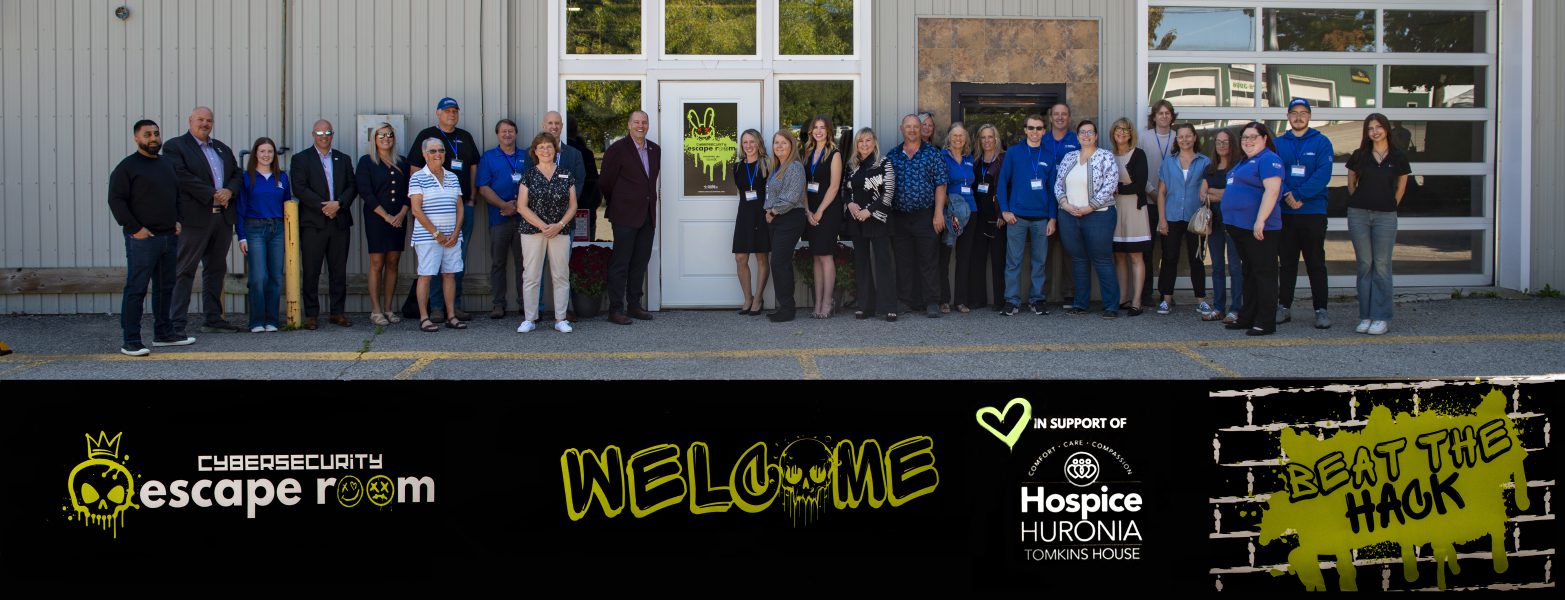
CSOLVE and siberX have partnered to bring a new cybersecurity escape experience to Midland!

The Cybersecurity Escape Experience is an immersive, gamified cybersecurity activation set inside a dynamic industrial warehouse in Midland, Ontario. Designed to engage students, professionals, and curious minds
alike, this space blends hands-on learning, thrilling narrative design, and interactive tech challenges into one unforgettable journey.
The experience features three immersive escape rooms, each built around a unique cybersecurity storyline. Individuals and teams will navigate high-stakes, puzzle-driven environments that simulate the pressur
e and complexity of real-world cyber incidents.
With its gritty, industrial-inspired atmosphere and individually themed rooms, the space creates an intense, cinematic setting that enhances every moment of the challenge.
This is more than an escape room; it’s a sandbox for the future of cyber education and awareness.
Who Is This For?
- High school and college students interested in cyber careers
- Post-secondary institutions seeking experiential learning spaces
- Educators looking to bring curriculum to life through simulation
- Corporate teams eager for engaging team building with a cyber twist
- Industry leaders exploring community outreach or talent development
This unique experience has been organized by Compu-SOLVE and siberX, with the help of the Midland Public Library. All proceeds raised will go to Hospice Huronia – Tomkins House.
It will run throughout the fall at 781b Balm Beach Rd East, Midland. Operating hours are Monday and Wednesday from 12 PM to 5 PM and Friday from 12 PM to 8 PM.
Admission requires a minimum donation of $10 per person. Schools and non-profits can contact us to arrange a free visit.
Thank you to Eaton, Vianet, and Cisco for sponsoring this experience.
Book your CyberSecurity Escape Room experience online today – an interactive team training like no other! https://siberx.org/escapemidland/
For more details, reach out to Melanie Pauze at CSOLVE: melanize.pauze@csolve.ca